
Hark! the herald angels sing
The group of scruffy shepherds on the hillside huddled closer around their campfire. It would be a long, cold night, keeping watch over their flocks of sheep and goats. It was a hard, monotonous life at times, but they had each other, and the stories they told would shorten the night and hasten the dawn. However, their night was about to take a fateful turn.
In a moment, the warm glow of their fire paled compared to a glorious light that shone all around them. A bright angelic figure hung in the sky and proclaimed good news for all people; the Saviour of the world had been born. Then it was no longer just a single angel, but a great multitude singing all around them. The shepherds were terrified, and is it any wonder? The distant howl of a prowling wolf, the suspicious rustle of a would-be sheep-stealer—these other noises they knew to expect—but this was something wildly different, dramatically new.
A little over 2,000 years ago, it wasn’t to an emperor or ruler that the angels first came to tell the news of this baby born, but to this ragtag bunch of shepherds. When they got over their fright, they hurried on down to Bethlehem and were the first visitors to behold the child in the manger. That encounter with the baby Jesus set their hearts and voices singing for the rest of their lives.
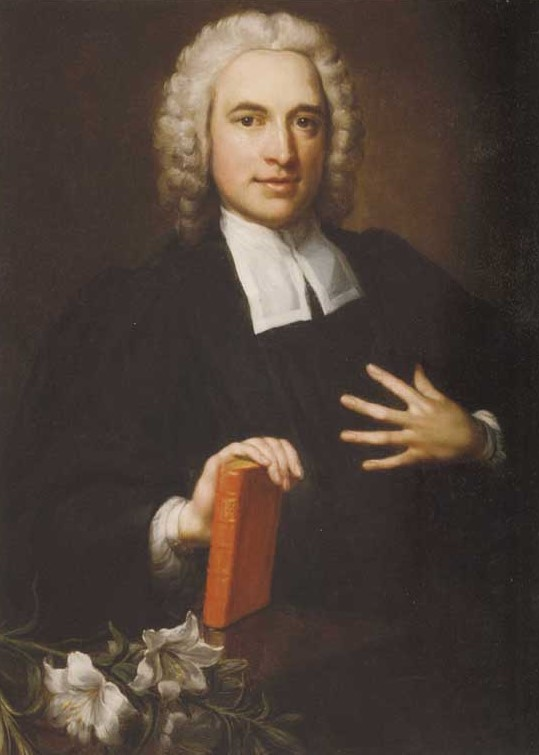
Charles Wesley’s hymn is set to a tune by Mendelssohn you can really belt out. But more than that, every line is positively bursting with Christological fire to warm the cockles of the coldest heart. There is a reason this classic advent hymn has been a firm favourite for the last 300 years. This post is simply an enjoyment of his hymn and the Christ it proclaims.
‘Join the triumph of the skies’
Hark! the herald angels sing,
“Glory to the new-born King;
Peace on earth, and mercy mild;
God and sinners reconciled.”
Joyful, all ye nations, rise,
Join the triumph of the skies;
With the angelic host proclaim,
“Christ is born in Bethlehem.”
Wesley grabs our attention with ‘Hark!’ Stop. Listen. Those shepherds on the hill couldn’t help but harken–it’s not every day you see a flock of angels (choir, host? I’m not sure of the collective noun)! For us, however, these events are somehow familiar yet faraway. Therefore, the first verse calls us to worship. It’s an invitation for all the nations to stand up and join in the song of triumph that the angels started all those years ago. And what good news we have to sing about!
All of history hangs on the coming of the Lord Jesus Christ. We live in 2025 A.D. (Anno Domini – ‘in the year of our Lord’), but far more than that, the little baby face that gazed up at those wondering shepherds was the greatest expression of the mercy of God. He brings peace, He is the Prince of Peace: ‘God and sinners reconciled.’ This new-born King is the fulfilment of God’s plan to redeem fallen, broken sinners, like you and me, from the two-fold curse of sin and death. The new-born King, the Christ (Messiah) is here. The waiting is over.
‘Veiled in flesh the Godhead see’
Who is this new-born King? Where did He come from?
Christ, by highest heaven adored.
Christ, the everlasting Lord,
Late in time behold Him come,
Offspring of a virgin’s womb.
Veiled in flesh the Godhead see,
Hail, the incarnate Deity!
Pleased as Man with man to dwell;
Jesus, our Immanuel!
The baby Jesus’ first bed was a feeding trough, His first visitors a rough bunch of half-crazed shepherds claiming to have seen shiny people in the sky, it’s an inauspicious start. But something is special. It’s not that He was a cute little baby (once they cleaned up the mess). It’s that nine months before He was someplace entirely different: ‘highest heaven’. Christ is the glorious, ‘everlasting Lord’ of heaven. We sometimes talk about people who ‘light up the room’. Well, in heaven, that was Christ–and He was about to light up the world as well!
‘Pleased as Man with man to dwell’, but not like a rich prince sleeping rough for a night to see what it feels like. Oh no, He would live thirty-three years, experience the curse of sin and then taste death as one of us. He was born naked and helpless and He would die naked and bleeding on a cross. Scripture says,
though he was in the form of God, [Christ] did not count equality with God a thing to be grasped, but emptied himself, by taking the form of a servant, being born in the likeness of men. And being found in human form, he humbled himself by becoming obedient to the point of death, even death on a cross.
Philippians 2:6-8
‘Light and life to all He brings’
HaiI, the heaven-born Prince of Peace!
Hail, the Sun of Righteousness!
Light and life to all He brings,
Risen with healing in His wings.
Mild, He lays His glory by,
Born that man no more may die;
Born to raise the sons of earth;
Born to give them second birth.
Yet–and get your head round this one–as well as being born as a Man here, Christ still oversaw all things there. The whole time He was on earth, He neither left heaven nor shirked His heavenly responsibilities. He ‘upholds the universe by the word of his power’ (Hebrews 1:3) and ‘in him all things hold together’ (Colossians 1:17). ‘Light and life to all He brings.’ He is the rising Sun banishing the darkness. Like Aslan in The Lion, the Witch and the Wardrobe, every stone statue that He breathes on comes to life. Echoing Revelation 21:4, C.S. Lewis’s writes of his Christ-like hero:
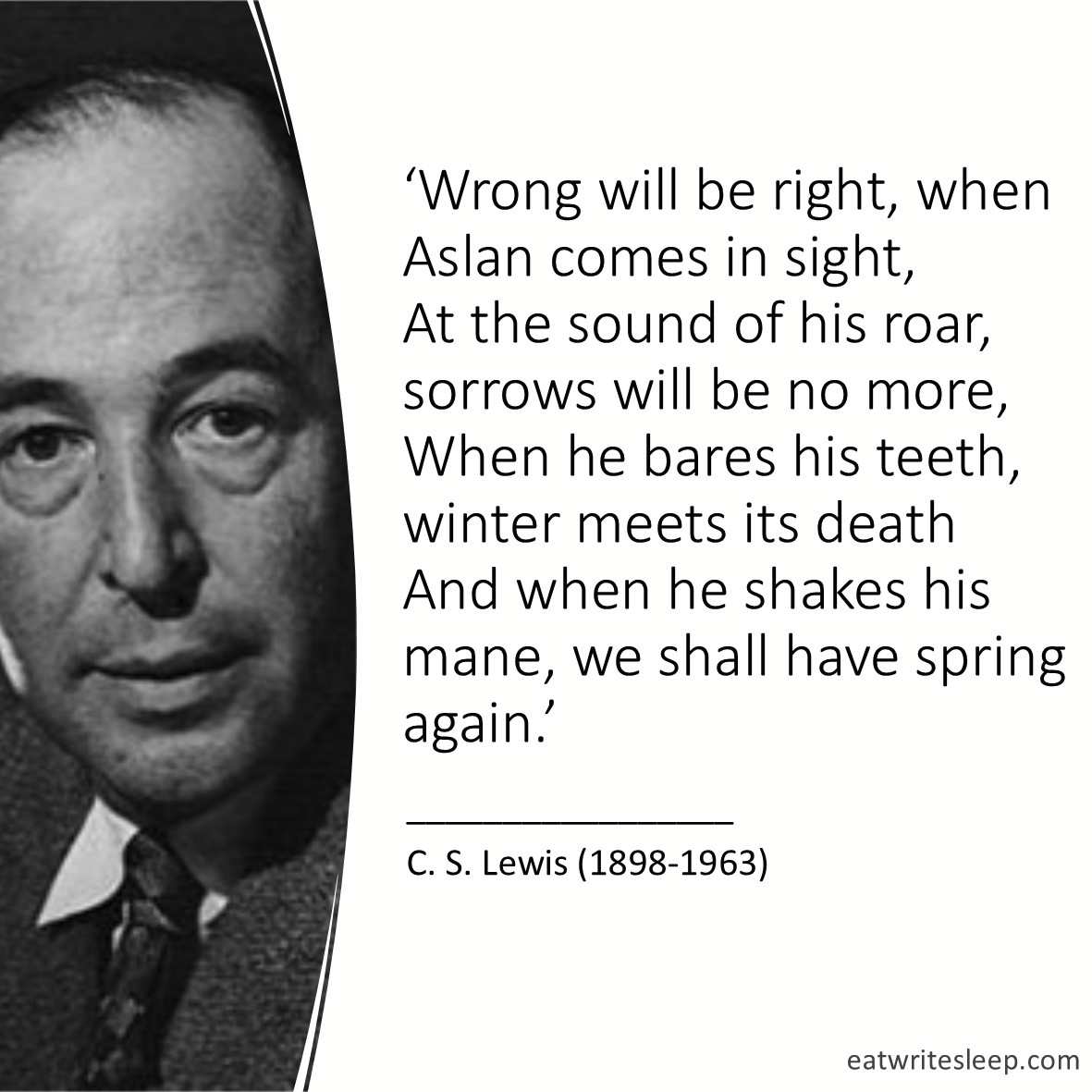
Wrong will be right, when Aslan comes in sight,
At the sound of his roar, sorrows will be no more,
When he bares his teeth, winter meets its death
And when he shakes his mane, we shall have spring again.1
Similarly, Wesley hits us with three reasons why Jesus left His throne on high and was born low:
Born that man no more may die
Born to raise the sons of earth;
Born to give them second birth.
Because of Jesus, death is dead and we are free from the fear of it. Because of Jesus, we, creatures of earth, are made sons and daughters of the heavenly King, adopted into His family. Because of Jesus, we can have a new heart and a new life to live for Him.
‘Come, Desire of nations, come’
Come, Desire of nations, come,
Fix in us Thy humble home;
Rise, the woman’s conquering Seed,
Bruise in us the serpent’s head.
Now display Thy saving power,
Ruined nature now restore;
Now in mystic union join
Thine to ours, and ours to Thine!
It may seem odd to you that Wesley ends his hymn with a call for the ‘Desire of nations’ to come (relating Haggai 2:7 KJV to the Messiah), isn’t the point of Christmas that He has already come?
Ah, but He will come again. We are privileged to live sandwiched in the time between Christ’s two comings. Isn’t it amazing that Christians can look back to Christ’s first coming and rejoice, as well as look forwards to Christ’s second coming and rejoice?
Christ’s first coming was successful. He died and rose again. He completed His mission.
Therefore God has highly exalted him and bestowed on him the name that is above every name, so that at the name of Jesus every knee should bow, in heaven and on earth and under the earth, and every tongue confess that Jesus Christ is Lord, to the glory of God the Father.
Philippians 2:9-11
And His second coming will be equally successful: Christ will come to ‘judge the living and the dead’ (2 Timothy 4:1). In this intervening time, we have a mission as well: we are to pray for and proclaim His coming. When we go forth and tell, showing by our lives the mercy and love of Christ, we ‘[hasten] the coming of the day of God’ (2 Peter 3:12). ‘And people will come from east and west, and from north and south, and recline at table in the kingdom of God’ (Luke 13:22).
‘Fix in us Thy humble home.’ By faith, the Spirit of Christ dwells within all Christians. We are His temple, founded on Christ (1 Corinthians 3:11, 16), dedicated to the worship of the Triune God.
Rise, the woman’s conquering Seed,
Bruise in us the serpent’s head.
The first promise of the Gospel is in Genesis 3:15; throughout the Old Testament, we see the ongoing war between the seed of the woman and the seed of the serpent. Wesley invokes the significance of these connotations: Christ is the fulfilment of this first Gospel promise. If we are in Christ now we are freed from sin’s penalty and power, but not yet its presence, therefore we ought to pray to the Spirit of Christ that He—by His refiner’s fire—may sanctify our hearts and remove all trace of sin, thus our ‘Ruined nature to restore’. And so we are joined in ‘mystic union’ to our glorious bridegroom, the Lord Jesus Christ.
Sing with the angels and the shepherds
I’m not sure the shepherds sang with the angels in the hills. They were too terrified to do anything except gape heavenwards. But after their first encounter with Jesus and His angels, they went back to the hills, ‘glorifying and praising God for all they had heard and seen, as it had been told them’ (Luke 2:20). Now those shepherds are in heaven where I’ll bet the shyness has rubbed off and they’re singing with the angels.
So let’s join in the song that the herald angels sung all those years ago, that millions of followers of Jesus have sung since. Together, we sing with one heart and one voice, glorifying and praising God for all that we have heard and seen. And if you’re tone deaf (like me) and lose your voice or find your mind wandering, then remember when we sing, we’re rehearsing for when we’ll sing anew with the angels and the shepherds in the company of the Lord Jesus Himself. In glory, we’ll be able to really go for it with voices in perfect pitch:
Hark! the herald angels sing,
“Glory to the new-born King!”
- CS Lewis, The Lion, the Witch and the Wardrobe (Glasgow: William Collins, 1950), 75. ↩︎

